Methodology
Your philosophy, structured so the whole club can use it
A playing philosophy only matters if a coach can act on it on a wet Tuesday evening. Forma turns your club's model into a structure that reaches the session plan.
Start from what you already have
Bring your existing documents in
Most clubs are not starting from nothing. They are starting from documents nobody uses.
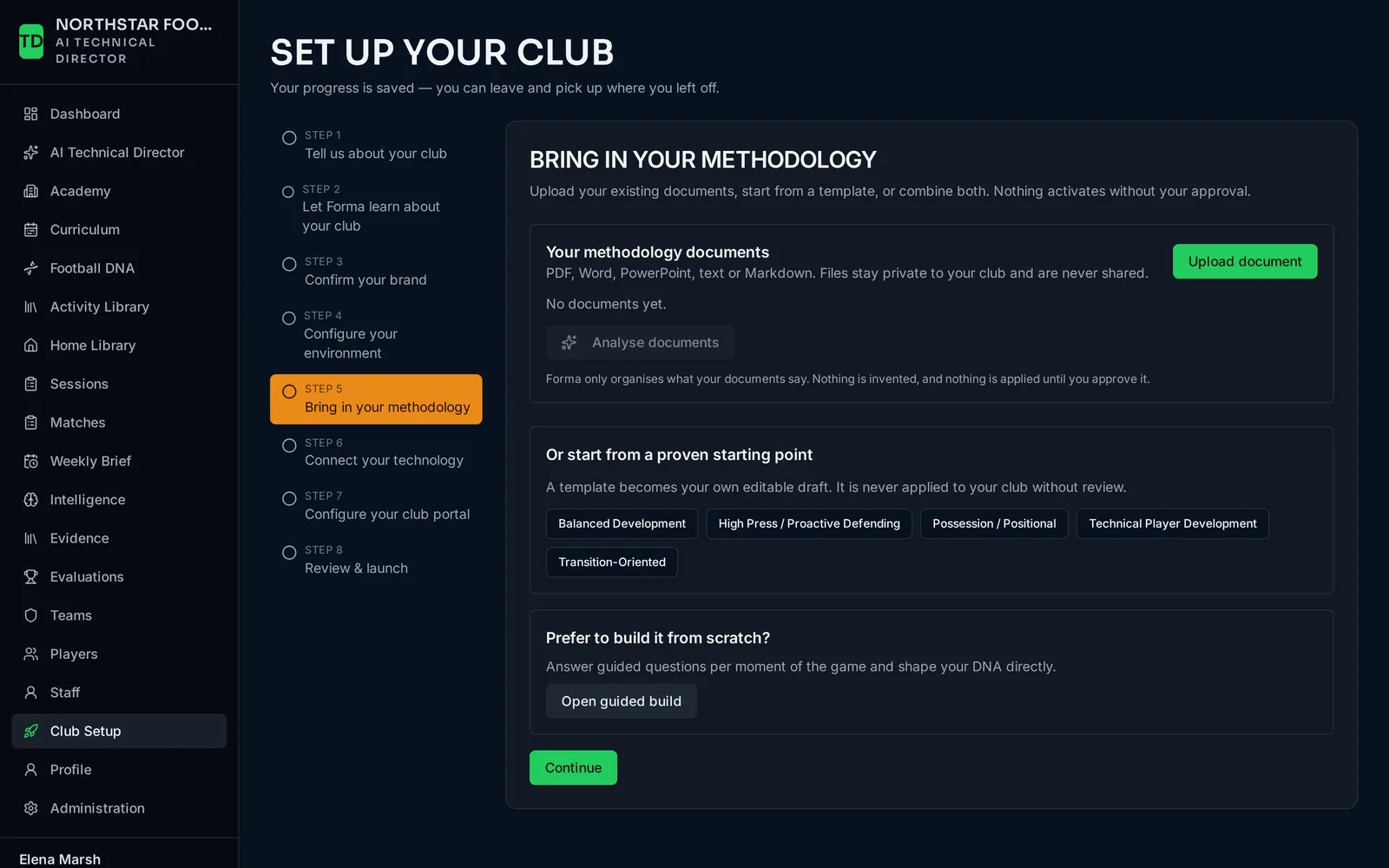
Upload the playing model, curriculum notes and coaching guides your club has already written. Forma reads them and drafts a structured methodology: the moments of the game you care about, the principles inside each one, and the behaviours that show a player is applying them.
That draft is exactly that — a draft. Your technical staff review it, edit it, and approve it before it becomes the club's reference. The AI does the tedious structuring work; the football decisions stay with your football people.
The structure
A football knowledge graph, not a folder of files
Everything is linked, so nothing floats free of the model.
Game moments
In possession, out of possession, and the transitions — the frame your methodology hangs on.
Principles
How your club wants to play within each moment, in your own language rather than a generic template.
Sub-principles
The more specific ideas underneath a principle, so age groups can work at the right level of detail.
Observable behaviours
What a coach should actually be able to see a player doing. This is what makes evidence capture possible later.
One reference
Every coach working from the same model
The point is not the document. The point is alignment.
Once approved, the methodology is the reference the rest of the system points at. Curriculum weeks carry principles from it. Session activities are organised by the concepts they develop. Observations are recorded against behaviours defined in it. Development plans target priorities expressed in it.
That is what makes a club's identity survive coach turnover, age-group transitions and a long season: the model is in the system everyone works in, not in a file only the technical director opens.
- A club does not have a methodology until it is being delivered — why written playing models rarely reach the pitch
Ownership
Versioned, archived and yours
Change history
Methodology changes are recorded, so you can see how the club's thinking developed over time.
Archive and restore
Retire a principle without destroying it, and bring it back if the club's direction changes.
Technical approval
Only technical decision-makers can approve methodology changes. Nothing enters the club record automatically.
Talk it through
See it against your own club
If your club already has a written philosophy, the quickest test is to see what Forma makes of it. Book a demo and we will walk through it with your age groups, your methodology and your season in mind.